Smart Living Products
ISDN2001/2002: Second Year Design Project

Independent study
Pressure Sensor Integration and Force Measurement for Elderly Rehabilitation
By Ken
Introduction
This independent study focuses on how pressure sensors can be used in our soft training device for elderly users. Since the product is soft and deformable, it is difficult to evaluate the user’s exercise performance by observation only. The pressure sensor helps us collect force data and understand how much force the user applies during training.
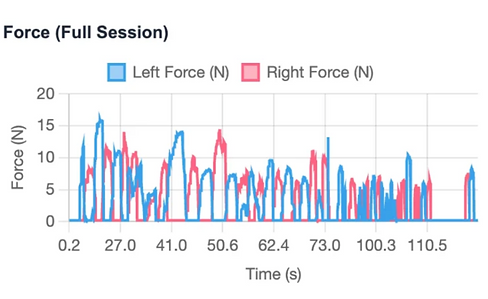
In this study, I explored the best position to place the sensor, the characteristics of the sensor, how to use it in our product, and how to calculate useful force data from the sensor readings. With this data, we can show the force trend and better understand how the elderly user performs during exercise.

How it works:
The pressure sensor works by changing its electrical resistance when force is applied. When the user presses on the sensor, the contact area inside the sensor increases, causing the resistance to decrease. This change in resistance can be converted into a voltage signal and read by the microcontroller. By analyzing the sensor reading, we can estimate the force applied by the user during exercise.
How to Convert Pressure Sensor Resistance into Force Data


1.
First, the pressure sensor is connected in a voltage divider circuit. The sensor resistance changes when force is applied, and the microcontroller reads the output voltage.
2.
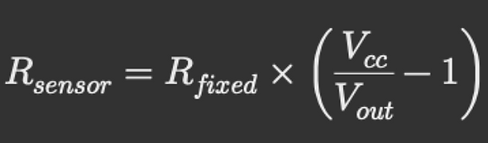
Then, from the voltage reading, we can calculate the sensor resistance
3.
After we get the sensor resistance from the ESP ADC , we have to map it with the resistance - force curve
4.
We have to do the calibration, we used a weighing scale as the standard reference. When force was applied to the pressure sensor, the actual force value was measured by the scale at the same time. Then, we compared the sensor reading with the force value shown on the scale. By recording several sets of data, we created a relationship between the sensor output and the actual applied force. This calibration process allows the sensor reading to be converted into more accurate force data.
How to integrate to our product
1.
First we added the acrylic at the back of the pressure sensor as our product is soft, the force applied by the user’s foot may not be distributed evenly across the pressure sensor. This can lead to unstable and inconsistent readings. And adding the acrylic at the back helps distribute the force more uniformly over the sensing area

2.
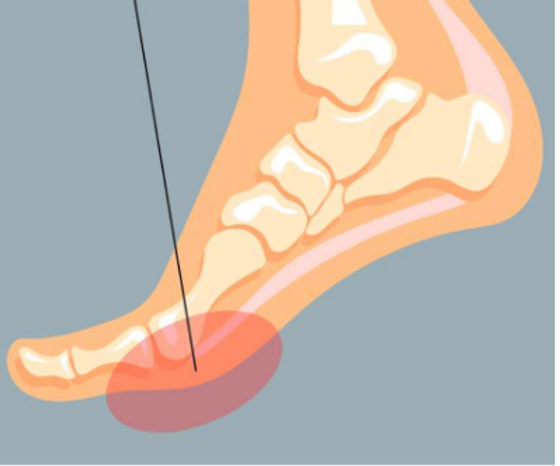
And then we put the sensor beneath the ball of the foot and the reason is that this area naturally applies the highest and most consistent force during the rehabilitation movement. Since the foot has a natural curved shape, not every part of the foot makes equal contact with the cushion. The arch of the foot often has limited contact, while the toes can move independently and produce unstable readings. In contrast, the ball of the foot serves as the primary contact point during pressing motions and transfers force more directly to the cushion. Positioning the sensor in this location allows it to capture stronger, more consistent, and more repeatable force data, improving the accuracy of exercise monitoring and performance evaluation.